Tuesday, November 17, 2009

Undercover Video Shows Pig Farm Employees Allegedly Abusing Pigs


Warning: Video is very graphic and may be disturbing

By Marla Cichowski, Fox News Chicago
Monday , November 16, 2009

A disturbing video released exclusively to Fox News by the animal rights group Mercy for Animals (MFA) shows a string of alleged abuses at one of the nation's largest pig farms, including footage of employees picking up baby pigs and tossing them like footballs.

Additional scenes from the video show injured pigs going uncared for, pregnant hogs being kept in very small pens, with several portions of the video so disturbing that Fox News will not show. MFA is now taking on America’s farming industry, hoping its latest undercover investigation will help create new federal and state laws to ensure better treatment for farm animals before they are slaughtered.

The national animal rights group’s investigation involves a large pig-breeding farm in central Pennsylvania owned by Country View Family Farms (CVFF). An MFA employee who applied for a job at the farm wore a hidden camera to record a shocking 12-minute video while he worked inside the pig barns for three months earlier this year.

The video starts by showing CVFF employees picking up baby pigs by their ears and hind legs and throwing them between employees. Another disturbing section of the video shows baby pigs being euthanized in carbon dioxide gas chambers. Although this euthanasia practice is standard throughout the pork industry, MFA claims the gassing procedure at this particular farm did not work properly and caused baby pigs to suffer unnecessarily.

MFA also claims adult female pigs were kept in gestation crates that are too small, and sick pigs were left untreated for weeks and did not receive proper medical care. “There are no federal laws that protect animals while they are on the farm, and most state anti-cruelty statutes exempt farm animals,” Daniel Hauff, MFA Director of Investigations, told Fox News.

“What we documented is standard and largely accepted by the pork industry and as a civilized society it’s our moral obligation to make sure animals don’t suffer needless cruelty. It’s important we look at these animals the same way we look at dogs and cats because there is no difference. They feel the same pain, the same joy our beloved animals at home do,” Hauff said.

Fox News Channel visited the Country View Family Farm in Fannettsburg, Penn., where CVFF veterinarian, Dr. Jessica Clark, and communications manager Eric Haman sat down with us to watch the MFA video for the first time. "There are some things in this video that I can’t and won’t defend.

The mishandling of animals I can't defend, it’s unacceptable," Haman told Fox News. "But there are others that could be seen out of context and I can’t really understand what’s going on.” Country View Family Farms, a division of Hatfield Quality Meats, is one of the largest pork producers in Pennsylvania and operates more than 100 pig farms across Pennsylvania, Ohio and Indiana.

While watching the MFA video, Haman says he felt anger and disappointment. He maintains CVFF takes animal welfare very seriously, requiring all employees to undergo rigorous training and sign code of conduct letters agreeing to proper handling of the animals. “We are more strict on ourselves than any government regulation could be. We hold ourselves very highly accountable," Haman told Fox News.

"As a business, it makes no sense to not take the best care of our animals that we can — No. 1 from an ethical standpoint, but secondly from a business sense.” Clark expressed similar disappointment in what she saw on the video, but defended the company. “CVFF is dedicated to taking care of the animals and we'll immediately investigate what is on this tape and take any necessary actions.”

Two days after the interview at the CVFF Fannettsburg farm, Haman told Fox News that the barn manager at the farm had been “immediately relieved of her responsibilities and a new barn manager assumed responsibility.” The mishandling of pigs was an issue discovered at the Fannettsburg farm back in July, according to Haman. Since then, CVFF has re-trained all employees to “reinsure every team member at every farm was perfectly clear on our animal handling code of conduct.”

Currently there is no federal law requiring the U.S. Department of Agriculture to inspect farms where animals are raised for slaughter. Most states, including Pennsylvania, exempt farm animals from state anti-cruelty laws that apply to domestic animals.

In 2007, the National Pork Board, which monitors the pork industry, launched its Pork Quality Assurance Plus program, focusing on animal welfare training and encouraging pork producers to hire third-party auditors to inspect their farms. "You have someone come out and go through your facility and give you suggestions on how to change and improve things," Iowa pork producer Dave Moody told Fox News.

"It’s not just a self-check the box and you pass the certification sort of deal. There is some definite education to it,” Daniel Hauff says MFA will keep fighting for stronger state and federal animal welfare laws while continuing to pressure grocery store chains to boycott companies that treat farm animals in ways MFA considers unethical.

But animal producing farms, including CVFF, realize they have become targets for groups like MFA, which promotes a strict vegetarian diet. The president of the American Association of Swine Veterinarians, Dr. Butch Baker, who also watched the MFA video, says it is upsetting to see animal rights organizations try to destroy America’s farmers. “They (MFA) would like to put all those people (farmers) out of business and out of work," Baker told Fox News. "I have no patience for anyone who abuses animals or no tolerance and I don’t think anyone should, but these films ... really are an attack on the rural lifestyle of America.

"People in rural communities depend on farms and farming for their livelihood. If you let an extremist group run the industry that’s just as bad as letting the people who didn't care about the animals at all run the industry,” he said.

Monday, November 16, 2009

The 'Fat Map': Putting World Hunger Into Perspective


Per capita calorie consumption on a nation by nation basis, compiled and produced by the World Food Program

By Princess Haya Bint Al Hussein, Huffington Post
11.16.09

Hunger now scars the lives of over 1 billion people -- a new record. Today, Monday the 16th, world leaders will gather at a UN food summit in Rome to debate what to do about it. As a former Goodwill Ambassador for the World Food Program, I sense how the meeting may go. There will be more media attention on the politicians than on the issues, an abundance of speeches, and a series of oddly fancy luncheons -- with more speeches. At a similar luncheon, I remember wondering: What if I could magically transfer the 1000 calories in this vanilla souffle in front of me to a malnourished child begging in the slums of Nairobi? Sharing the extra calories eaten in the United States or Europe alone would end hunger in Africa.

These gratifying fantasies highlight some terrible inequities in how the world handles its food supply. In 2006, the World Food Program produced, but never publicly released, a map charting food consumption. Dubbed the "Fat Map," it shows where the world's calories go. Nations grow or shrink based on how much the average person eats. Depending on your perspective, it maps starvation or overeating.

The mis-distribution of food goes deeper than even the "Fat Map" implies. In India, for example, more than 300 million overweight people coexist with another 300 million who starve. Chronic diseases like diabetes and heart disease that often stem from overeating are growing at a far faster rate in developing countries than in the more prosperous West. In my own region, the Middle East, obesity is skyrocketing, especially among young people.

In 2007-2008, a global food crisis surprised us as prices soared. But would the crisis have been as severe if we were not so accustomed to wasting the food we have?

Globally we are moving to an "energy morality" with young people lobbying against wasting energy -- yet there is no "food morality" even though food is organic energy. We sit by and watch each other overeat and discard food without a thought. Extravagant overindulgence is viewed as hospitality and many assume that being a good parent requires that we force feed those we love.

Eating is even a competitive sport. Earlier this year in Taiwan, a binge-eating contest claimed the life of a 23 year-old student. Each Fourth of July in New York, a young man named Joey Chestnut takes on his Japanese archrival Takeru Kobayashi at a hot dog eating contest -- last year Joey wolfed down 68 hotdogs in 10 minutes -- more than a week's supply of calories for a hungry African. At one point, Kobayashi even had a hot dog eating contest with a large brown bear -- a bizarre hit on YouTube:

We pay dearly for this overconsumption. Recent calculations set obesity-related health spending just in the United States at $150-$200 billion -- more than all foreign aid worldwide. The cost of extra medical care for the obese runs as high as $1400 per person annually. Over 2 billion people do not earn that much in a year.

Food losses are another reflection of our embrace of excess. Each year, food waste costs the average Briton over 400 UK pounds per year, while US households lose or discard 14 percent of their food. America's supermarkets and restaurants discard another 27 million tons. Adding farm and wholesale losses brings the annual bill to over $100 billion just in the US. Similar figures would, no doubt, emerge from analyzing losses in the European Union and I suspect the Gulf States as well.

While initiatives emerge to tax unhealthy food, improve nutrition education and label foods to show the carbon footprint required to produce them, there is no broad public embrace of the need to eat less and eat responsibly. Retailers and restaurants still sell food in portion sizes and packages encouraging excess eating and waste.

It is time to recognize the energy, health, and productivity losses we incur from consuming and wasting so much food. Public health campaigns worldwide -- including in the Gulf States -- now promote the message that excess weight and lack of physical activity is linked to heart disease, type 2 diabetes, strokes, and some types of cancer. Is anyone listening? Well, after years of increases, the Center for Disease Control in the US found that levels of obesity have finally begun to level off.

Would cutting overeating and waste really change the contours of the "Fat Map"? Not by itself. The UN estimates we need $30 billion more invested in agriculture yearly. But each of us can consume more wisely and donate food we now waste to a food bank or charity. If it makes sense to save energy, why throw away billions of dollars worth of food and overeat until it endangers our health and our future?

Sunday, November 15, 2009

Week 13 Agenda


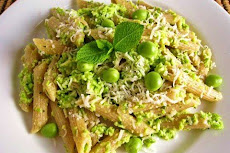
Veggie Penne with Pesto from Rachel Ray's 30 Minute Meals (Food Network, USA)

Week 13
M 11.16
Read: KC—pg. 75-218
In-Class: Watch—Waitress (2007)

W 11.18
Read: KC—pg. 219-250
In-Class: Book discussion; Presentations
Catering Group 2: Soup

UPCOMING:
Week 14
M 11.23
Read: KC—pg. 251-295; CR—“Leave Calorie Counts Off the Menu” by Trice Whitefield, “Want a Warning Label with Those Fries?” by Jeff Jacoby, “Editorial: New Law Will Help Those Who Want It” from The Chico Enterprise Record, “California Calorie Law Alters Chains’ Fare” by M.S. Enkoji, “Nutrition by the Cup” from Starbucks, “Dinner Menu Nutritional Index” from Maggiano’s Little Italy
In-Class: Book discussion, Presentations

W 11.25
NO CLASS—Mandated Furlough Day: This class only

Friday, November 13, 2009

Industry Pushes Chocolate Milk in Schools


By Emily Fredrix, Associated Press

MILWAUKEE — The creators of the "Got Milk?" campaign are getting ready to make a big push to keep chocolate milk on kids' minds and on school lunch menus, a plan that has some educators and obesity activists none too pleased.

The new ad campaign from the dairy industry, set to launch Monday, emphasizes that sugary flavorings are ways to get kids to drink milk. Without them, some youngsters won't drink regular milk and won't get its nutrients, the ads say.

The "Raise your hand for chocolate milk" campaign starts Monday with an ad in USA Today featuring chocolatey brown colors and the launch of a Web site that asks people to sign a petition declaring their support for chocolate milk in school.

But some educators and obesity experts say kids get enough calcium — essential for bone growth — and will drink white milk if it's the only milk offered. They say kids get too much sugar, which is heightening America's obesity problem, and schools shouldn't serve chocolate milk at all.

The idea behind the campaign is to draw a distinction between chocolate milk and the soda and candy that have come under attack in schools, said Vivien Godfrey, CEO of the Milk Processor Education Program, the industry marketing group that developed the campaign with the National Dairy Council. Godfrey said the effort will cost between $500,000 and $1 million.

She said most kids choose chocolate milk, but without it they drink juice, soda or water, which don't have the same nutrients. The facts — that chocolate milk does have nutrients — are getting lost in the debate over school lunches, she said.

"If there's even a chance chocolate milk might get taken out of schools, that really can do more harm than good," she said.

It's not clear how many schools have chocolate milk or are pulling it. But parents and school districts are becoming increasingly concerned and asking for more information, said Margie Saidel, a vice president with Chartwells School Dining Services, which manages food programs in 600 districts and supports chocolate milk.

But experts like Marlene Schwartz, deputy directory of the Rudd Center for Food Policy and Obesity at Yale University, want chocolate milk tossed. She said kids have too much sugar already and chocolate milk has no place in schools.

Dairy products are a common source of added sugar in children's diets, so that's why parents and educators consider removing them, she said. But the research does not point to any calcium shortages when chocolate milk is removed in schools.

"I don't believe children are going to go on a thirst strike and refuse to drink anything," she said.

Kids happily drink white milk — now the only offering at the Boulder Valley School District in Boulder, Colo., said Ann Cooper, the school's director of nutrition services, who calls herself the "renegade lunch lady" for her efforts to promote more nutrition in school lunches.

She estimates that the extra calories from chocolate milk — as much as 40 or 60 calories on top of a typical 110 calorie 8-ounce serving of white milk — could add up to 5 pounds of weight gain over the 180-day school year. That's why the district no longer offers chocolate milk.

Chocolate milk does have its defenders, even among nutritionists.

"It's better to get the milk in with a little bit of sugary flavoring than have them pick almost any alternative," said Connie Weaver, head of the department of Food and Nutrition at Purdue University and a spokeswoman for the American Society for Nutrition. She has received research funding over the years from the dairy industry, but not on chocolate milk, she said.

A student petition got a Barrington, Ill., distrcit to compromise on its chocolate milk ban.

A soon-to-be fifth-grader, 10-year-old Haley Morris drafted her own petition in support of flavored milk and got about 70 signatures.

Superintendent Tom Leonard decided on a compromise: "Flavored milk Fridays" where the district offers chocolate or strawberry milk one day a week. The district is testing the program through January to see if kids drink more milk the days flavors are offered.

"All of my friends and I, we just wanted chocolate milk back to drink because we like chocolate milk better than white," Morris said.

Wednesday, November 11, 2009

Doctors Concerned About Obesity Irked By Physician Group's Grant from Coca-Cola


By Kaye Spector, The Cleveland Plain Dealer
November 10, 2009, 9:50AM

CLEVELAND -- Caldwell B. Esselstyn Jr., the longtime Cleveland Clinic surgeon who lectures around the world and counsels people regarding the health benefits of a plant-based diet, was among 22 U.S. scientists and physicians who recently signed an open letter of opposition to the American Academy of Family Physicians.

Their beef? The AAFP announced in October that it accepted a six-figure grant from the Coca-Cola Co. to create content about beverages and sweeteners for the academy's consumer Web site, FamilyDoctor.org.

The AAFP said its first-ever "consumer alliance" would enable the academy to develop educational materials and "incorporate the products [consumers] love into a balanced diet and a healthy lifestyle." The new content is expected to launch in January.

The partnership created a stir among some physicians, nutritionists and health experts. Many saw the arrangement as a threat to the 62-year-old academy's commitment to science and family medicine.

Among the critics, in addition to Esselstyn's group, are the Center for Science in the Public Interest and nutrition authority Marion Nestle.

Soda and other sweetened beverages are the No. 1 source of added sugars in the U.S. diet, the American Heart Association says, and many health experts blame the drinks, at least in part, for the soaring U.S. obesity rate. A 12-ounce can of soda can contain up to 10 teaspoons of sugar.

"The AAFP's Web site should be criticizing sugar-sweetened beverages in the strongest language and providing candid, objective advice about the health and safety questions related to diet drinks," the letter sent by Esselstyn's group says. "But with Coca-Cola providing the funding, the AAFP simply cannot do that."

Sunday, November 8, 2009

Week 12 Agenda


New Orleans Shrimp Pot Pie from Sunny Anderson's Cooking for Real (Food Network, USA)

M 11.9
Read: KC—pg. 36-74
In-Class: Book discussion; Presentations
Journal 5 Prompt: Do the foods you eat say anything about your social standing? For example, can a correlation be made between the types of foods you eat and your income level, access to health care, and education? Using “Chewing the Fat: Alton Brown on Race, Class, and Food” from Serious Eats (eR) as a basis, explore the theory that your diet is a reflection of your socio-economic standing.
Due: Journal 5
Catering Group 2: Salad

W 11.11
NO CLASS—Veterans Day

UPCOMING:
Week 13
M 11.16
Read: KC—pg. 75-218
In-Class: Watch—Waitress (2007)

W 11.18
Read: KC—pg. 219-250
In-Class: Book discussion; Presentations