Tuesday, September 29, 2009

Meat-flavoured Chocolate "A Hit with Men"


A New Zealand chocolatier insists that her new creation - meat-flavoured chocolate - is actually delicious and is proving to be a hit with men.

By Bonnie Malkin, London Telegraph
Published: 16 Sep 2009

Hanna Frederick has developed venison chocolate truffles, made from a blend of dark chocolate and ground-up salty dried meat.

Shaped like small sausages, the sweets have a salami aftertaste, she said.

Admitting it was a weird combination, she said meat and chocolate went together "amazingly well".

"There's this smoky taste to start, then a strong chocolate flavour comes in, and at the end you have this wonderful taste of salami," she told the Australian Associated Press.

She said the snack, which will be served as a starter to 150 people at New Zealand's Meat Industry Association conference, had proven a hit with men "who can't get enough of it", but admitted women had been markedly "quieter" in expressing approval.

"Women tend to love their chocolate more fruity, more feminine, and I guess meat doesn't have that feel to it."

This is just the latest in a string of quirky creations from Dr Frederick, a Hungarian-born food chemist who abandoned a corporate career to make chocolate.

She has already made headlines by feeding beer-flavoured chocolate to brewers and recycled orange peel-chocolate to waste management workers.

Monday, September 28, 2009

For Your Health, Froot Loops


By Wiliam Neuman, The New York Times
September 5, 2009

A new food-labeling campaign called Smart Choices, backed by most of the nation’s largest food manufacturers, is “designed to help shoppers easily identify smarter food and beverage choices.”

The green checkmark label that is starting to show up on store shelves will appear on hundreds of packages, including — to the surprise of many nutritionists — sugar-laden cereals like Cocoa Krispies and Froot Loops.

“These are horrible choices,” said Walter C. Willett, chairman of the nutrition department of the Harvard School of Public Health.

He said the criteria used by the Smart Choices Program were seriously flawed, allowing less healthy products, like sweet cereals and heavily salted packaged meals, to win its seal of approval. “It’s a blatant failure of this system and it makes it, I’m afraid, not credible,” Mr. Willett said.

The Food and Drug Administration and the Department of Agriculture have also weighed in, sending the program’s managers a letter on Aug. 19 saying they intended to monitor its effect on the food choices of consumers.

The letter said the agencies would be concerned if the Smart Choices label “had the effect of encouraging consumers to choose highly processed foods and refined grains instead of fruits, vegetables and whole grains.”

The government is interested in improving nutrition labeling on packages in part because of the nation’s obesity epidemic, which experts say is tied to a diet heavy in processed foods loaded with calories, fats and sugar.

The prominently displayed label debuts as many in the food industry and government are debating how to provide information on the front of packages that includes important elements from the familiar nutrition facts box that usually appears on the back of products.

Eileen T. Kennedy, president of the Smart Choices board and the dean of the Friedman School of Nutrition Science and Policy at Tufts University, said the program’s criteria were based on government dietary guidelines and widely accepted nutritional standards.

She said the program was also influenced by research into consumer behavior. That research showed that, while shoppers wanted more information, they did not want to hear negative messages or feel their choices were being dictated to them.

“The checkmark means the food item is a ‘better for you’ product, as opposed to having an x on it saying ‘Don’t eat this,’ ” Dr. Kennedy said. “Consumers are smart enough to deduce that if it doesn’t have the checkmark, by implication it’s not a ‘better for you’ product. They want to have a choice. They don’t want to be told ‘You must do this.’ ”

Dr. Kennedy, who is not paid for her work on the program, defended the products endorsed by the program, including sweet cereals. She said Froot Loops was better than other things parents could choose for their children.

“You’re rushing around, you’re trying to think about healthy eating for your kids and you have a choice between a doughnut and a cereal,” Dr. Kennedy said, evoking a hypothetical parent in the supermarket. “So Froot Loops is a better choice.”

Froot Loops qualifies for the label because it meets standards set by the Smart Choices Program for fiber and Vitamins A and C, and because it does not exceed limits on fat, sodium and sugar. It contains the maximum amount of sugar allowed under the program for cereals, 12 grams per serving, which in the case of Froot Loops is 41 percent of the product, measured by weight. That is more sugar than in many popular brands of cookies.

“Froot Loops is an excellent source of many essential vitamins and minerals and it is also a good source of fiber with only 12 grams of sugar,” said Celeste A. Clark, senior vice president of global nutrition for Kellogg’s, which makes Froot Loops. “You cannot judge the nutritional merits of a food product based on one ingredient.”

Dr. Clark, who is a member of the Smart Choices board, said that the program’s standard for sugar in cereals was consistent with federal dietary guidelines that say that “small amounts of sugar” added to nutrient-dense foods like breakfast cereals can make them taste better. That, in theory, will encourage people to eat more of them, which would increase the nutrients in their diet.

Ten companies have signed up for the Smart Choices program so far, including Kellogg’s, Kraft Foods, ConAgra Foods, Unilever, General Mills, PepsiCo and Tyson Foods. Companies that participate pay up to $100,000 a year to the program, with the fee based on total sales of its products that bear the seal.

The Smart Choices checkmark is meant to take the place of similar nutritional labels that individual manufacturers began plastering on their packages several years ago, like PepsiCo’s Smart Choices Made Easy and Sensible Solution from Kraft.

In joining Smart Choices, the companies agreed to discontinue their own labeling systems, Ms. Kennedy said.

Michael R. Taylor, a senior F.D.A. adviser, said the agency was concerned that sugar-laden cereals and high-fat foods would bear a label that tells consumers they were nutritionally superior.

“What we don’t want to do is have front-of-package information that in any way is based on cherry-picking the good and not disclosing adequately the components of a product that may be less good,” Mr. Taylor said.

He said the agency would consider the possibility of creating a standardized nutrition label for the front of packages.

“We’re taking a hard look at these programs and we want to independently look at what would be the sound criteria and the best way to present this information,” Mr. Taylor said.

Michael Jacobson, executive director of the Center for Science in the Public Interest, an advocacy group, was part of a panel that helped devise the Smart Choices nutritional criteria, until he quit last September. He said the panel was dominated by members of the food industry, which skewed its decisions.

“It was paid for by industry and when industry put down its foot and said this is what we’re doing, that was it, end of story,” he said. Dr. Kennedy and Dr. Clark, who were both on the panel, said industry members had not controlled the results.

Mr. Jacobson objected to some of the panel’s nutritional decisions. The criteria allow foods to carry the Smart Choices seal if they contain added nutrients, which he said could mask shortcomings in the food.

Despite federal guidelines favoring whole grains, the criteria allow breads made with no whole grains to get the seal if they have added nutrients.

“You could start out with some sawdust, add calcium or Vitamin A and meet the criteria,” Mr. Jacobson said.

Nutritionists questioned other foods given the Smart Choices label. The program gives the seal to both regular and light mayonnaise, which could lead consumers to think they are both equally healthy. It also allows frozen meals and packaged sandwiches to have up to 600 milligrams of sodium, a quarter of the recommended daily maximum intake.

“The object of this is to make highly processed foods appear as healthful as unprocessed foods, which they are not,” said Marion Nestle, a nutrition professor at New York University.

Sunday, September 27, 2009

Week 6 Agenda


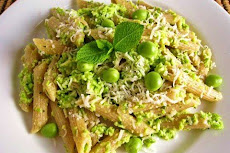
Swordfish with Citrus Pesto from Giada De Laurentiis's Everyday Italian (Food Network, USA)

Week 6
M 9.28
Read: CR—“Sorry Fugu” by T.C. Boyle, “Taste” by Roald Dahl
In-Class: Short story discussion, including audio versions of “Sorry Fugu” and “Taste”
Due: Nonfiction analysis essay

W 9.30
Read: CR—“Last Requests” by Giles Smith, “January: Christmas Rolls” by Laura Esquival
In-Class: Short story discussion; Watch—“Binge Drinking Mom” from 30 Days
Journal 3 Prompt: Britain’s Jamie Oliver is what is referred to as a “celebrity chef,” a chef whose personal popularity often exceeds that of their cooking. In fact, many chefs today, including Bobby Flay, Emeril Lagasse, and Tyler Florence, are known more for their TV shows, cookware lines, and restaurants, than their contributions to cooking. Using “Close Up: Jamie Oliver” from TVNZ (eR) as a basis, consider what the impact of these chefs is. Do they ultimately promote good cooking, or is it more often about fame? Is cooking better or worse off with celebrity chefs?
Due: Journal 3

For Sec. 60 Only: No class on Wednesday, Sept 30th; email me your journal by 9 AM.

Note: Sec. 5 meets Wednesday as usual.


UPCOMING:

Week 7
M 10.5
NO CLASS—Mandated Furlough Day: This class only

W 10.7
In-Class: Literary analysis/Short answer responses

Thursday, September 24, 2009

Assignment: Nonfiction Analysis Essay


Prompt:
Michael Pollan's The Omnivore's Dilemma examines the ways in which we have become disconnected with the foods we eat. In fact, it is a dizzying illustration of the journeys plants and animals take their way to our dinner tables. Still, reading Pollan's book can be an overwhelming experience, one in which readers invariably examine their own eating habits—for better or worse.

In a concise essay, highlight three practices offered by Pollan which consumers can adopt to help both themselves and the environment. Use specific examples from the book to support your thesis.

Requirements:
  • MLA format, including parenthetical citation
  • 2.5-page minimum

The best papers will:
  • Stay within the parameters of the prompt
  • Have a concise thesis
  • Clearly support their thesis with solid evidence and a logic structure
  • Properly cite evidence using MLA's paranthetical citation method
  • Conclude with a summation of your points
  • Be in proper MLA Style

Due: Monday, Sept. 28th (No late or emailed papers accepted)

Monday, September 21, 2009

New Ads from Americans Against Food Taxes

According to The Center for Media and Democracy's Sourcewatch, Americans Against Food Taxes (AAFT) "is a coalition funded by the beverage industry which consists of major restaurant chains, food and soft drink manufacturers and their associated lobbying groups. It was organized by the American Beverage Association to fight a proposed three to ten cent tax on soda, sugary drinks and energy drinks to help fund health care reform in the United States."

Here are the AAFT's latest national commercials:


The Americans Against Food Taxes' website can be found here.

New Rule: You Can't Complain About Health Care Reform If You're Not Willing to Reform Your Own Health


By Bill Maher, The Huffington Post
Sept. 18th, 2009

New Rule: You can't complain about health care reform if you're not willing to reform your own health. Unlike most liberals, I'm glad all those teabaggers marched on Washington last week. Because judging from the photos, it's the first exercise they've gotten in years. Not counting, of course, all the Rascal scooters there, most of which aren't even for the disabled. They're just Americans who turned 60 and said, "Screw it, I'm done walking." These people are furious at the high cost of health care, so they blame illegals, who don't even get health care. News flash, Glenn Beck fans: the reason health care is so expensive is because you're all so unhealthy.

Yes, it was fun this week to watch the teabaggers complain how the media underestimated the size of their march, "How can you say there were only 60,000 of us? We filled the entire mall!" Yes, because you're fat. One whale fills the tank at Sea World, that doesn't make it a crowd.

President Obama has identified all the problems with the health care system, but there's one tiny issue he refuses to tackle, and that's our actual health.

And since Americans can only be prodded into doing something with money, we need to tax crappy foods that make us sick like we do with cigarettes, and alcohol -- and alcohol actually serves a useful function in society in that it enables unattractive people to get laid, which is more than you can say for Skittles.

I'm not saying tax all soda, but certainly any single serving of soda larger than a baby is not unreasonable. If you don't know whether you burp it or it burps you, that's too big. We need to make taking care of ourselves an issue of patriotism. If you were someone who condemned Bush for not asking Americans to sacrifice for the war on terror, the same must be said for Obama and health care.

President Arugula is not gonna tell Americans they're fat and lazy. No sin tax on food on Obama's watch. And at a time when it's important to set new standards for personal responsibility, he appointed a surgeon general, who is, I'm sorry, kind of fat. Certainly too heavy to be a surgeon general, it's a role model thing. It would be like appointing a Secretary of the Treasury who didn't pay his taxes. He did?

And get this: Surgeon General Benjamin had previously been a nutritional advisor to Burger King. The only advice a "health expert" should give Burger King is to stop selling food. The "nutritional advisor" job was described as, "promoting balanced diets and active lifestyle choices" -- and who better to do that than the folks who hand you meat and corn syrup through a car window? When you have a surgeon general who comes from Burger King, it's a message to lobbyists, and that message is, "Have it your way."

Patrons Consume More Than the Meal


Restaurants encounter a rash of decor thievery

By David Kaplan, Houston Chronicle
Sept. 21, 2009, 5:55AM

Owner Sara Brook splurged on a $3,000 chandelier when she built her Dessert Gallery in Sugar Land two years ago — a luxury she didn't include at her first two locations.

“I wanted to make a beautiful statement,” she said.

In recent months, however, customers at the bakery/cafe started pulling crystals off the chandelier and either taking them home or leaving them in the restroom. It happened so often that the fixture's metal skeleton began to show.

Brook took the chandelier down, an experience she called “heartbreaking.”

“People are just so brazen,” she said.

Brook and other local restaurant owners aren't strangers to similar kinds of theft.

Restaurant theft that takes place during business hours is up slightly this year over last, while break-ins that occur when a restaurant is closed are down, Houston Police Department Captain Rick Bownds said.

People steal from restaurants for a variety of reasons, some of which are alcohol-related, said Kit Yarrow, a professor of psychology and business at Golden Gate University in San Francisco.

“Group-think and alcohol can turn otherwise decent people into thoughtless boobs,” she said. “They're not thinking of those items as belonging to another person. They're thinking of them as stage sets for their performance of bravado.”

If alcohol is not involved it's more opportunistic, Yarrow said. “Restaurants are emotionally different for people than other sorts of purchasing establishments. People ‘consume' the environment along with their meals. Evidently some folks take that to the extreme.”

An emotional toll

Restaurants do insure their valuables, but they have a tendency to insure more for catastrophic events, said Michael Shine, president of both the Greater Houston Restaurant Association and the Texas Food Group restaurant consulting firm.

“Even if we do get coverage for an accessory or piece of art, it may likely fall below the deductible level,” he noted.

Within a recent two week period, the Midtown restaurant T'afia has had seven break-ins and lost $3,000 worth of liquor.

“In 18 years, that's the first bad experience I've had,” said T'afia owner/chef Monica Pope, who has improved her security since the thefts took place.

In many instances, the worst part of the theft is not the value of the item taken, but the emotionally toll on the owner. It feels like a kick in the gut.

“Restaurant owners are hospitality-driven people,” observed Shine.

Independent restaurateurs often create an ambiance resembling their personality, he said. “Coming to their restaurant is like coming to their home.

“When you take something from it, you're taking a part of them. It hurts and makes you angry,” he said.

Grew up with print

At Ouisie's Table a few weeks ago, owner Elouise Adams Jones lost a work of art she's cherished most of her life. An original French print, an illustration of a little girl, was stolen.

She “grew up” with the piece, along with a matching print of a little boy, which Jones recently removed from the restaurant, Jones said.

As a girl she would look at them in the home of her Aunt Elouise Nazro, her namesake. Her aunt found the prints in Paris.

“She knew I loved them, and she gave them to me when I moved into my first apartment when I was 18 or 19,” recalled Jones who eventually put them up at Ouisie's Table.

Over the years the two prints became customer favorites, she said.

The print was stolen in broad daylight, an act of boldness that startled Jones. Someone could have easily witnessed it, she said: “I wish to God it had been me. It's just infuriating.”

She wonders if she should remove all of her personal items from Ouisie's, “but I don't want to.”

Vintage photo taken

Packed with relics from the Lone Star State, Goode's Armadillo Palace resembles a museum of Texana: Boots and guns under glass, Western blankets, American Indian pottery, vintage photos of the Old West and more.

“We live and breathe” Texas culture, said co-owner Levi Goode.

Among the collection was a photo by photographic artist John Bintliff, a friend of Goode's father Jim Goode, the founder of the Goode Co. resaturant chain.

The Bintliff photograph, taken in Valentine, shows a boy pushing a donkey across a highway to avoid approaching semi trucks. Only five copies of it were made.

Two years ago, someone broke the glass of the frame and walked off with the photo, Levi Goode recalled.

The Goodes couldn't get another print, although they were able to obtain an artist's proof, which now hangs on an Armadillo Palace wall.

A theft like that makes “you angry,” Goode said. “Unfortunately, being in this business, you're open to it happening.”

He has no plans to remove any of his artifacts from his restaurant, however.

“We're not gonna let one or two bad apples ruin it for everybody else,” Goode said.