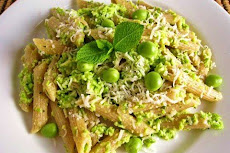
This week, 85 restaurants in the Valley will feature special $35 three-course fixed price dinner menus. It's a great way to explore Silicon Valley's eclectic culinary landscape.
More info here.

NEW YORK (Reuters Health) – People who get much of their daily liquids from plain water rather than other beverages may have healthier diets overall, a study suggests.
Using data from a national health survey of more than 12,000 Americans, researchers found that people who drank more "plain water" tended to eat more fiber, less sugar and fewer calorie-dense foods.
The reverse was true of people who got much of their fluids from other beverages, according to a report of the study in the American Journal of Clinical Nutrition.
The findings do not prove that drinking water makes for healthier eaters, said lead researcher Dr. Ashima K. Kant, a professor at Queens College of the City University of New York.
But, she told Reuters Health, they do suggest a connection -- and a reason to encourage people to choose water over beverages.
The findings are based on 12,283 Americans age 20 and older who took part in a government health and nutrition survey between 1999 and 2006. On average, respondents got one-third of their daily fluids from water, 48 percent from other beverages and the rest from food.
In general, the more water people drank, the more fiber and the less sugar they consumed. They also had a lower intake of calorie-dense foods -- a general marker of a healthier diet. Calorie density refers to the amount of calories in a food in relation to its weight; fruits and vegetables, for instance, tend to have a low calorie density.
From a "purely physiological" standpoint, Kant noted, people can get their fluid needs from any source. Drinking plain water, therefore, is not necessary, but it may be preferable, she said.
As for how much water a person should drink, there is no straightforward answer -- despite the popular belief that people need 8 glasses of water per day.
As a general rule of thumb, Kant said, sedentary healthy adults can let their thirst be their guide on when to drink.

Pierre Chandon, a marketing professor at Insead, the international business school in France and Singapore, said that the study adds to prior results that are discouraging for menu-labeling advocates. “Although its results are disappointing to those (including me) who are in favor of calorie information in restaurants, they are not that surprising,” Chandon said. “We know that informing people about nutrition value and changing their food preferences are two very different things. In fact, some studies have even shown that calorie disclosure can backfire and increase unhealthy choices among people who, for example, think that unhealthy (high-calorie, high-fat) food is tastier.”
The study’s authors suggest that labeling might work if combined with other efforts to prod diners toward healthier choices. “My sense is that to really influence obesity, we will probably need a combination of interventions,” Brian Elbel, assistant professor of medicine and health policy at New York University and lead author of the study, told me. “These will have to deal with the availability of foods in a community (both health and unhealthy), the price of foods (health and unhealthy), the marketing of foods and what we provide in schools for kids.”
One measure that New York has taken since the study is an educational campaign, which might combine with calorie counts to influence choices. “I do think it would have been helpful to look at consumers who both saw the labels and were also aware of the education program, but the data were collected prior to the NYC education component,” said Scot Burton, professor of marketing at the University of Arkansas’s business school.
Kelly Brownell, director of the Rudd Center for Food Policy and Obesity at Yale University and an advocate of menu labeling, said he expected the educational program, and a proposed sugar-sweetened-beverage tax that he also supports, could boost the results. He also took it as a positive sign that 28% of New York low-income diners said the menu labels influenced their purchases. “That’s a big number,” Brownell said. (Menu-labeling advocate Marion Nestle wrote that the study doesn’t mean menu labeling won’t have positive effects.)
“At least the public has information and that’s the government’s job — to make sure that the public has information,” Mayor Michael Bloomberg told reporters, according to Reuters.
To J. Justin Wilson, a senior analyst at the Center for Consumer Freedom, the study validates his group’s opposition to menu labels. “There wasn’t any proof it would be effective,” he said — and he says the same applies to the so-called soda tax. (Brownell disagrees, citing evidence from tobacco taxes.)
Two mitigating factors make the study not quite as damning for menu labels as it seems on first glance. First, it’s possible that the effect is smaller among people with lower incomes, because healthier options — such as salads or chicken breasts — often are more expensive. And second, though New York diners’ chain-restaurant meals averaged more calories after the law took effect, Elbel points out that the difference wasn’t statistically significant.